Dive Site Guide
The Stingray Sandbars: A Photographer's Guide
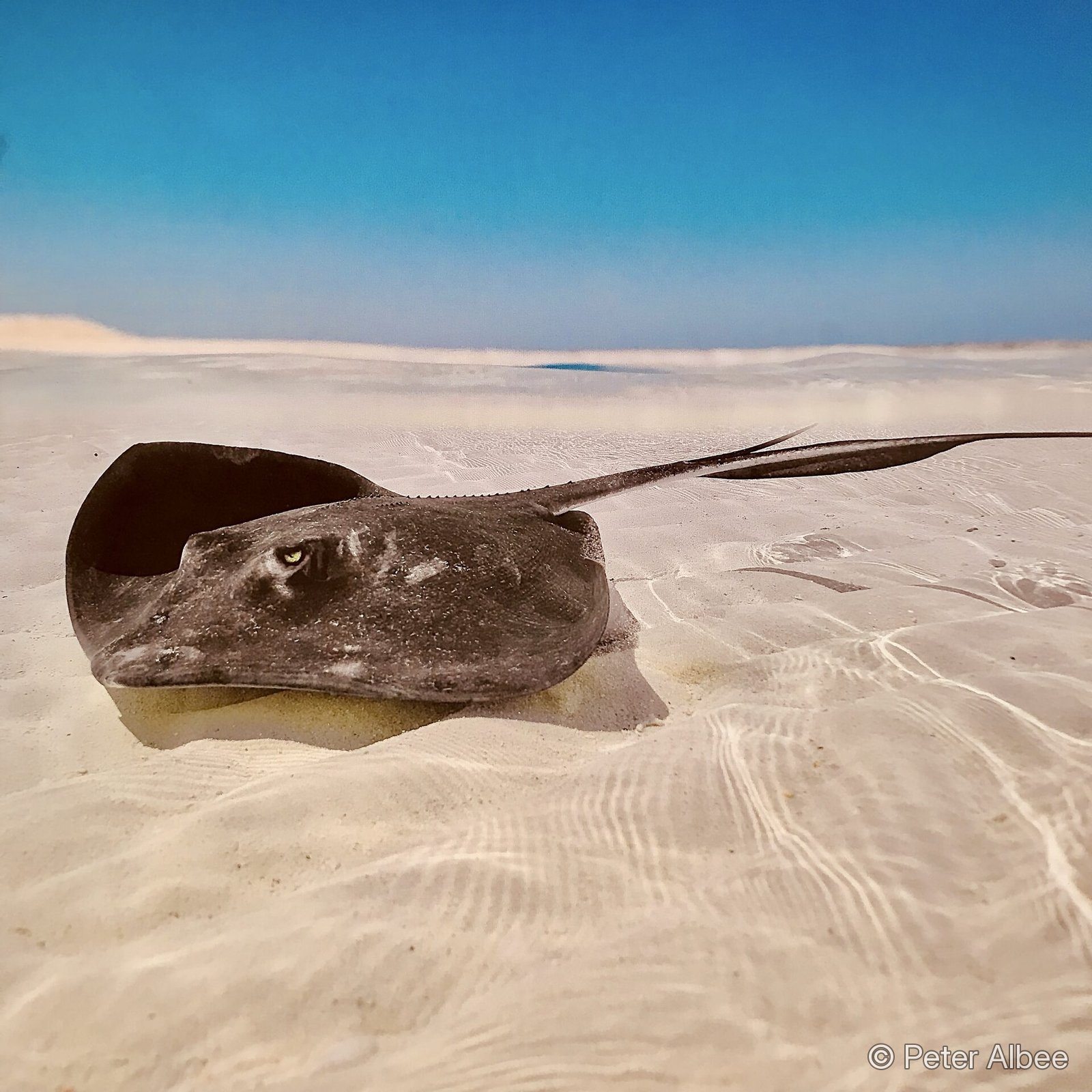
Of everything I've photographed in 38 years on the water, the stingray sandbars are still the trip I recommend most to first-time visitors with a camera. The southern stingrays that work these flats are used to boat traffic, the water is often knee-deep and gin-clear, and on a calm day you can get shots that look like they took a week of open-ocean diving to earn.
Where to look
Southern stingrays (Hypanus americanus) favor shallow, sandy flats near cuts and channels where tidal currents flush food across the bottom. In the Bahamas, the most reliable spots are protected sandbars just inside a cut, where the current slows and rays settle in to feed on crustaceans buried in the sand. These same features hold up across the wider Caribbean and Turks & Caicos — look for a sand flat adjacent to deeper water, not out in the open.
Timing the tide
Low tide to mid-rising tide is the sweet spot. Too low and the flat can be nearly dry; too high and the water column gets deep enough that light quality drops and the rays scatter more widely. I plan charters around the tide chart first, weather second.
Getting close without spooking them
Stingrays in high-traffic areas are remarkably tolerant of slow, deliberate movement, but they will bolt at sudden fin kicks or shadows crossing overhead. A few habits that consistently pay off:
- Approach low and slow, staying close to the bottom rather than swimming down from above.
- Let the ray settle after it senses you — most will resume feeding within 20-30 seconds if you stop moving.
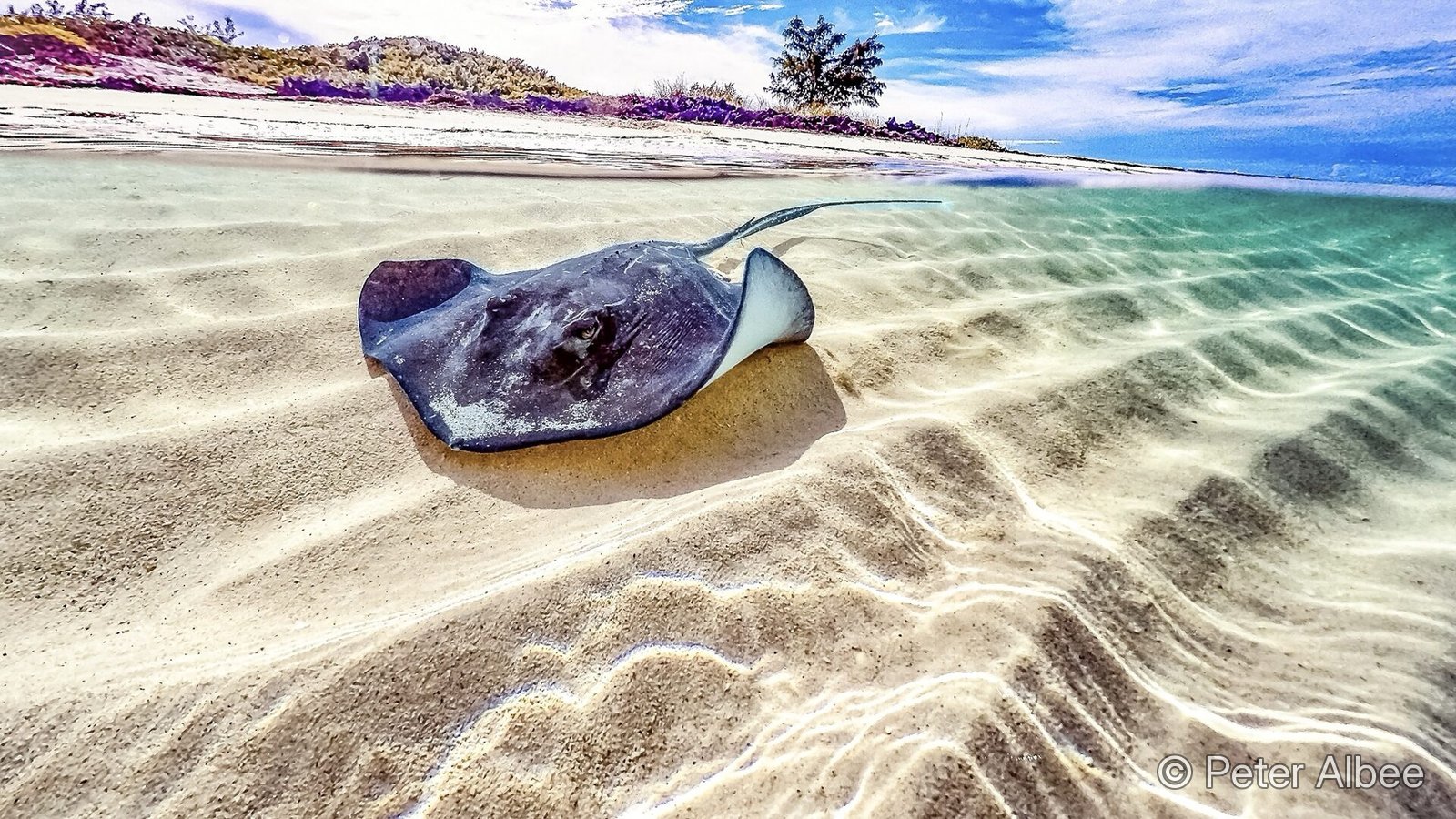
- Shoot wide and get close. A fisheye or wide rectilinear lens at close range keeps the ray sharp while still showing the texture of the sand.
- Watch your shadow. On a bright day your shadow crossing the ray is often what triggers it to move off.
The best stingray shot I ever got, I almost missed because I was still adjusting my housing when the ray settled two feet from my dome port. Sometimes the gear matters less than just being patient enough to already be in position.
A note on the split-level shot
These sandbars are also some of the best places to attempt a split-level, over-under composition — shallow enough that the dome port can sit right at the surface, calm enough (on the right day) that the waterline stays clean, and interesting enough above the surface, with the charter boat anchored nearby, to make the top half of the frame worth including. I've written more on the technique itself in a separate post on split-level photography.
If you're planning a Bahamas trip and want a guided version of this exact excursion, it's the basis for our Half-Day Stingray & Shallows charter.