Behind the Scenes
Behind the Shot: Getting the Split-Level Right
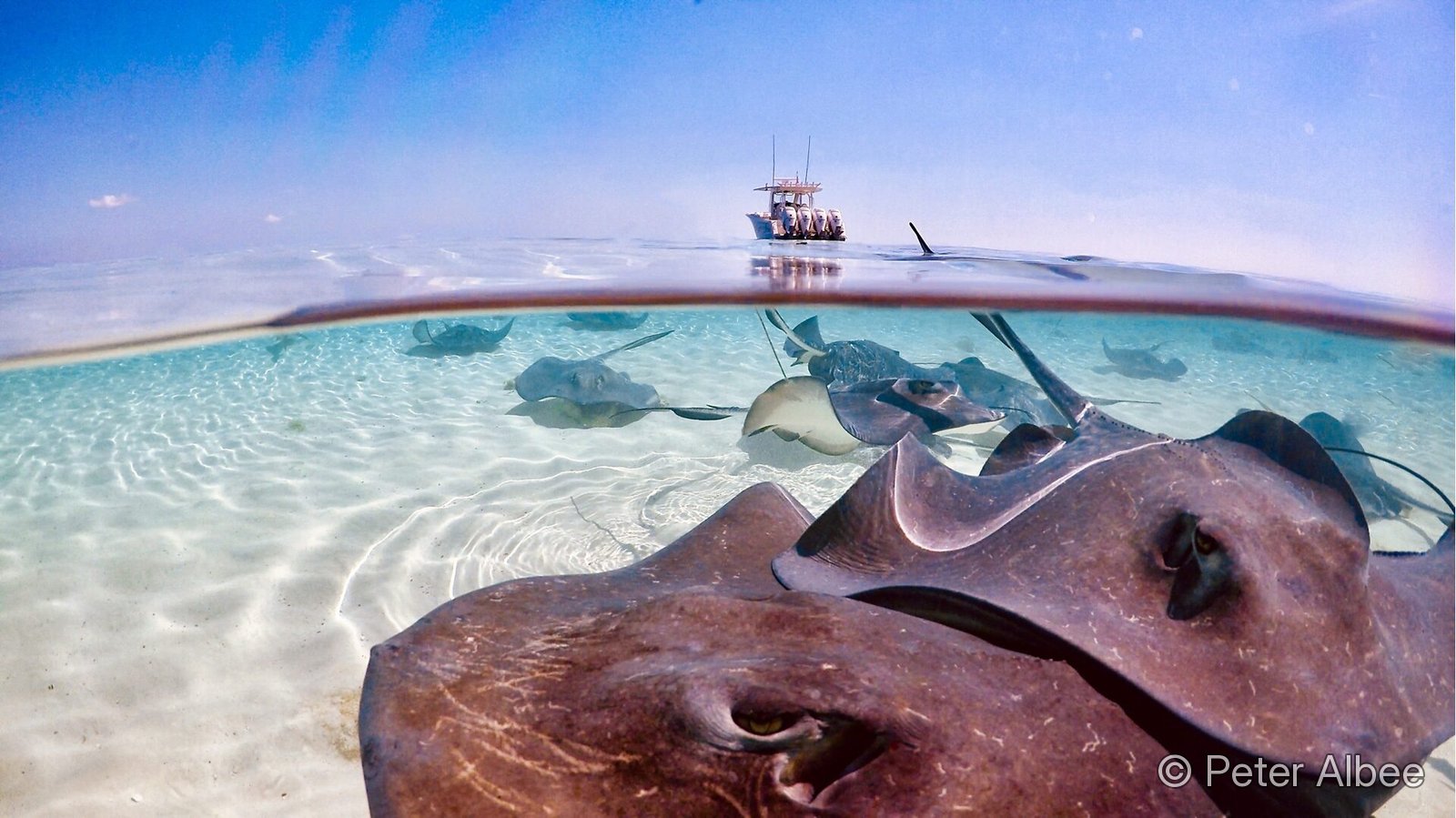
People ask about these shots more than almost anything else in the archive — the half-above, half-below images where you can see a stingray or a starfish underwater and the boat or the sky above, all in one frame. They look almost like a composite. They're not. Here's what actually goes into getting one.
The gear that makes it possible
An over-under shot depends entirely on a dome port — a curved piece of optical glass or acrylic on the front of the underwater housing that lets the lens see both above and below the waterline in the same exposure without the two halves looking warped or mismatched. My Aquatica housing on the Nikon D850 uses a large dome specifically because bigger domes make it easier to keep both halves of the frame in focus.
The real challenge: the waterline itself
The hardest part isn't the gear — it's the water. You need the dome port sitting exactly at the surface, with just enough of it submerged to show the underwater half clearly, and just enough above to catch the topside scene. A few inches too deep and you lose the sky. A few inches too shallow and the underwater half goes murky or disappears. In anything but calm conditions, the surface is moving that much within a single second.
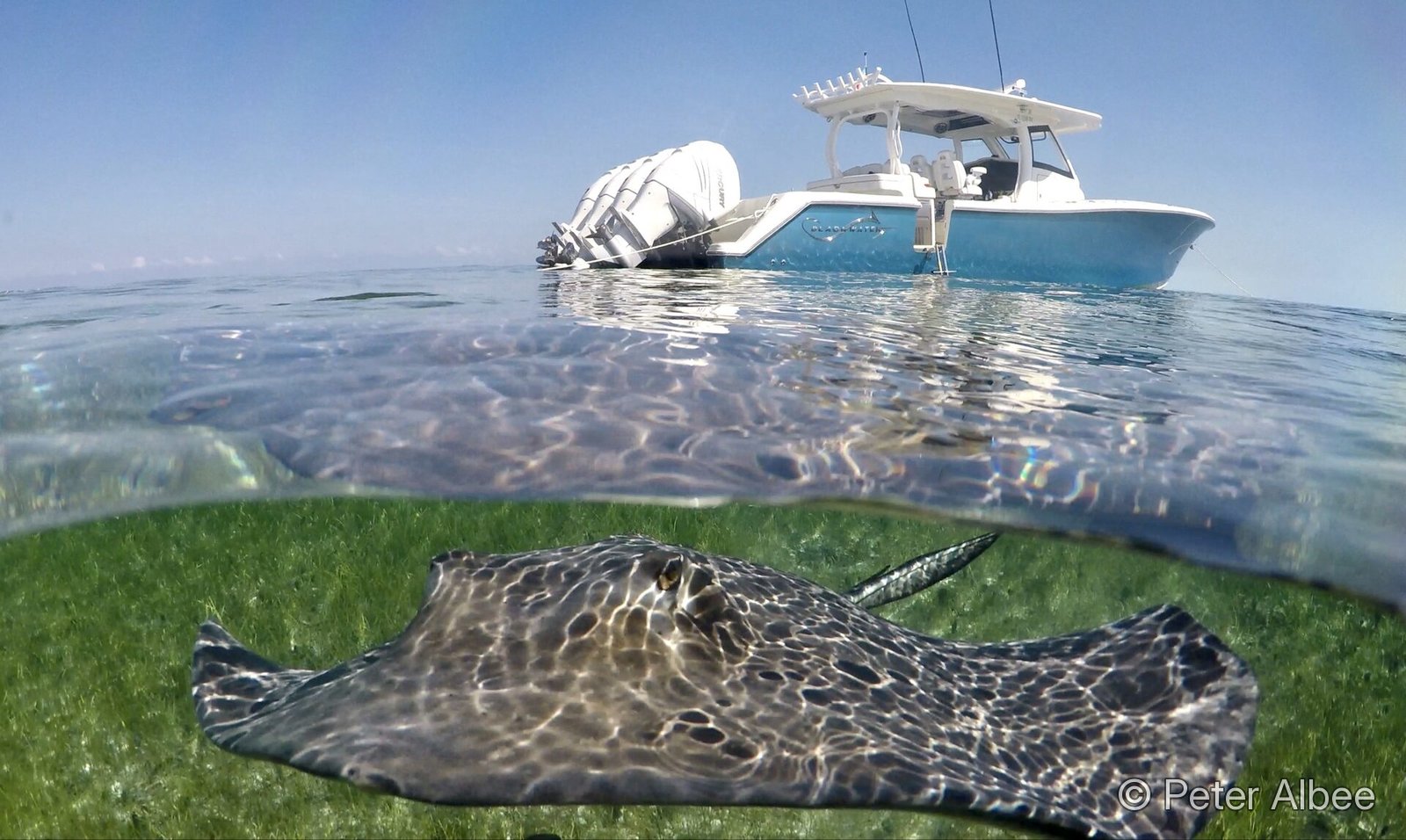
My approach, after a lot of trial and error over the years:
- Pick the calmest water available — protected sandbars and flats, not open chop.
- Get low in the water myself, so the dome sits naturally at the surface without me fighting buoyancy.
- Shoot in bursts through the swell, rather than waiting for a single "perfect" still moment that may never come.
- Position the boat deliberately in frame beforehand — it's often the anchor point for the topside half of the composition.
I probably take twenty frames for every one split-level shot that actually works. The ones that make it into the gallery are the survivors, not the norm.
Why it's worth the trouble
A good split-level shot does something a straight underwater photo can't: it shows the whole experience in one frame — the boat, the light, the surface, and the animal below it, all at once. It's become one of the signatures of this archive, and it's a big part of why the Bahamas sandbar and reef trips work so well as guided photo charters — conditions and positioning matter as much as the camera in your hand.